Masala Tokri: From WhatsApp Group Orders to a Gourmet Spice Brand Exporting to Four Countries
A mother's hobby masala mixes went from WhatsApp forwards to UK and Dubai kitchens, all from a home kitchen in Mumbai. The cheapest market test in India, turned into a brand.
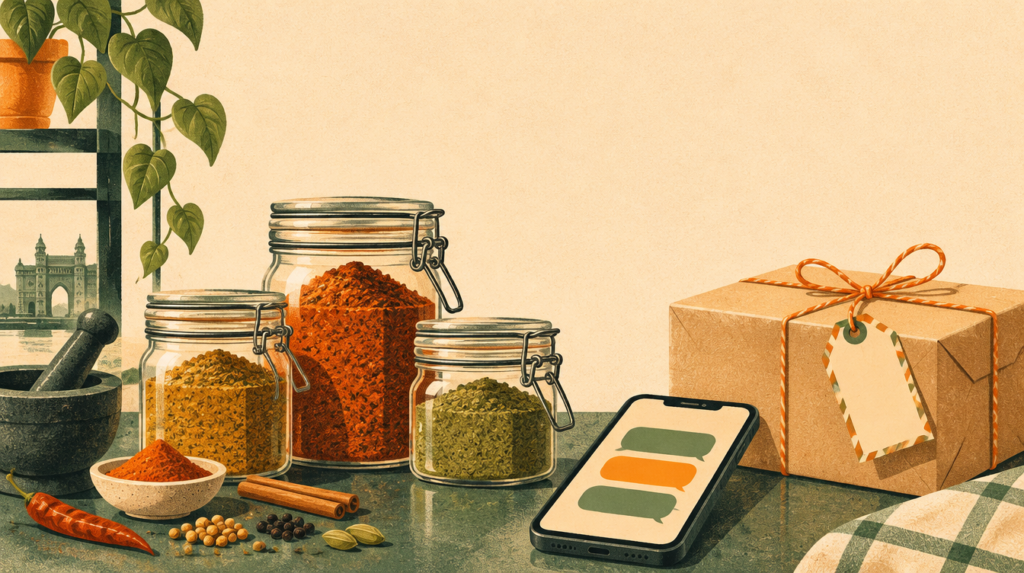
WhatsApp groups are a zero-cost MVP: validate demand with friends-of-friends before building a brand.
The Hobby Phase
Urmila Samant was always a passionate cook. In 2016 she took a formal course in spice-making, turning a hobby into a craft. She began sharing mixes with friends and family, then created WhatsApp groups where orders started arriving — the most honest product validation there is, since people were paying, not complimenting.
By 2018, one woman in a Mumbai kitchen was packing masalas for customers in the UK, Singapore, Dubai and the UAE.
The Business Phase
When one person could no longer do everything, daughter Aarti stepped in. In February 2019 they launched Masala Tokri as a premium-gourmet masala company with clean division of labour: Urmila owns product; Aarti owns sales, marketing and promotion.
The product moat is real: spices roasted in a machine built by Aarti's grandfather, then hand-pounded at four units in Dombivali — a texture and flavour retention that powder-blenders can't replicate — with zero chemicals or preservatives. The family background running masala chakkis unlocked premium raw-material vendors across India.
What You Can Steal
- Sell before you brand. Two years of WhatsApp orders proved demand before a rupee went into branding.
- Regional specificity commands premium prices. "Malvani Meat Masala" beats "meat masala" every time.
- A parent-child split of product and growth is one of the most stable founding structures in family business.
Start it today
If you were building this in 2026
- Sell your first 3 SKUs to 2–3 WhatsApp groups you're already in; note who reorders without being asked.
- Get FSSAI basic registration and one compliant label before you take orders from strangers.
- Use NRI relatives as your first export channel: ship small parcels, collect feedback, then formalise.
Mistakes to avoid
- Launching 20 masala variants before one has repeat buyers.
- Pricing like a local masala when your packaging and story are premium.
Registrations and licences you'll need
- FSSAI: Basic registration up to ₹12 lakh turnover, State licence above that, Central licence above ₹20 crore or for import/export. Apply on foscos.fssai.gov.in.
- GST: required above ₹40 lakh turnover for goods (₹20 lakh in special-category states), and in practice to sell on most marketplaces and quick-commerce apps.
- Legal Metrology: pre-packed goods need the mandatory label declarations (MRP, net quantity, manufacturer, best before, customer care), and packers usually need state registration.
- Udyam (free MSME registration) and your state's Shop & Establishment registration.
- Trademark your brand name early (Class 30 for spices, snacks, tea; Class 29 for pickles, ghee) on ipindia.gov.in.
- GS1 barcodes if you want modern trade or quick-commerce shelves.
Channels that work in this category
- WhatsApp and Instagram for the first 100 buyers: friends-of-friends, local groups, sampling.
- Amazon and Flipkart for search demand; Blinkit, Zepto and Instamart once you can handle dark-store replenishment.
- Distributors and kirana for scale: one strong distributor per city beats ten weak ones.
- Gifting and corporate hampers around Diwali for big, predictable orders.
Your first 90 days
- Days 1–30: lock one hero product, get FSSAI basic registration, test 3 pack sizes with 50 real buyers.
- Days 31–60: shelf-life and lab test, final packaging with compliant label, GST + marketplace listing.
- Days 61–90: one paid channel (Meta ads or marketplace ads) with a ₹30–50k test budget, track repeat rate before scaling.
Tools founders use
- Shiprocket / Delhivery for shipping
- Razorpay for payments
- Zoho Books or Vyapar for GST billing
- Canva for labels and creatives
This section is our own analysis, not the founder's words. Check current rules with a CA or the official portal before you apply.
Based on public reporting by SMBStory (YourStory) coverage of Masala Tokri. Read the original. Figures are as reported at the time.